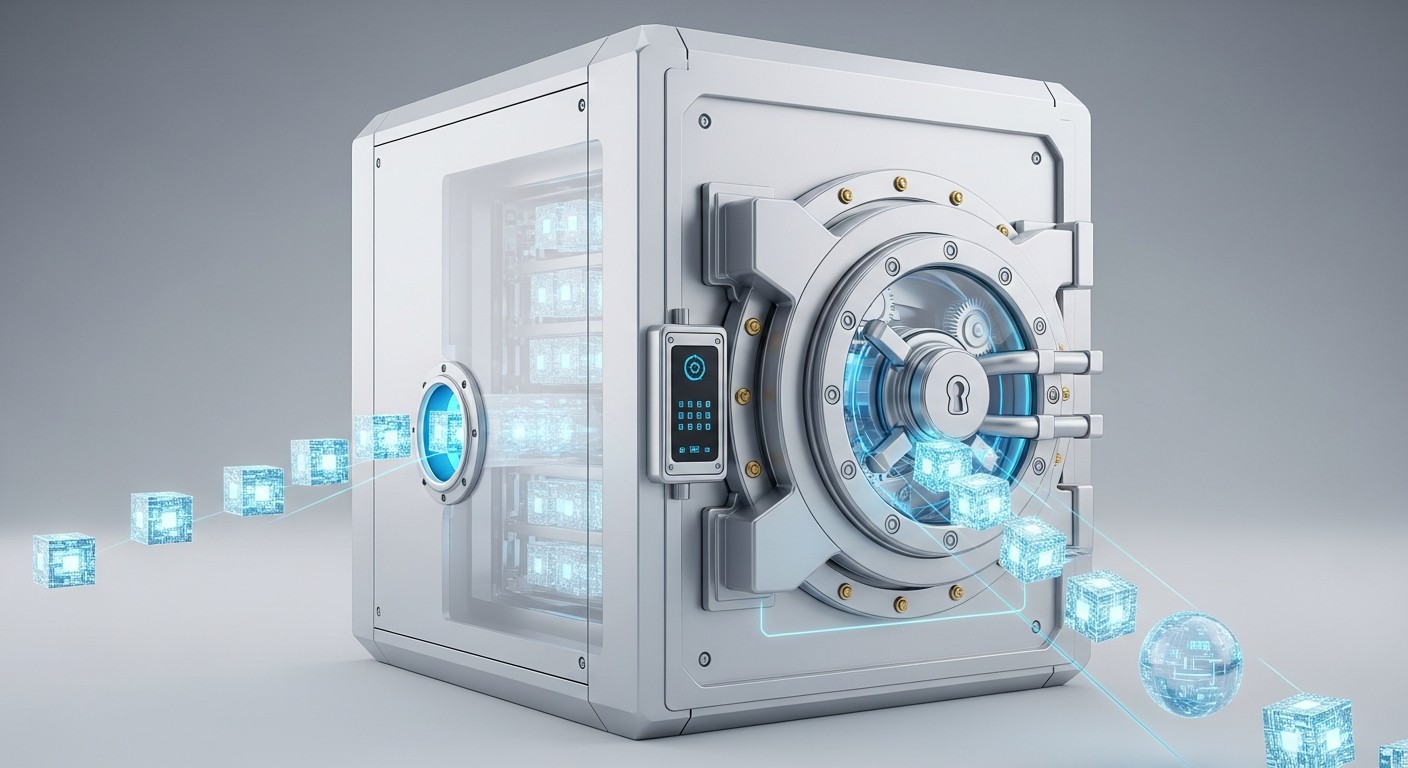
The most unsettling implication of the Möbius Bridge isn't about future data — it's about data that was captured years ago.
What Is "Harvest Now, Decrypt Later"?
"Harvest now, decrypt later" (HNDL) is a well-documented intelligence strategy. Agencies intercept and store encrypted communications they can't currently decrypt, betting that future advances in cryptanalysis or computing will make decryption possible later.
This isn't speculation. It's documented fact:
- The NSA's Utah Data Center (completed 2014) was widely reported to store intercepted encrypted communications
- The Snowden documents confirmed mass collection of encrypted internet traffic
- The Five Eyes alliance shares intercepted communications between member nations
- China's Great Firewall infrastructure captures encrypted traffic at national borders
Why the Möbius Bridge Makes This Urgent
All that captured traffic was encrypted with AES (via TLS/HTTPS). For a decade or more, it sat in storage vaults — emails, financial transactions, diplomatic cables, corporate communications, personal messages — waiting for exactly this kind of breakthrough.
If the Möbius Bridge works as claimed, that waiting may be over.
What Could Be Exposed
Data captured and stored over the past 10-15 years:
- Diplomatic communications: Embassy cables, treaty negotiations, intelligence briefings
- Corporate secrets: M&A plans, trade secrets, research data, board communications
- Personal communications: Emails, messages, browsing history of targeted individuals
- Financial data: Banking transactions, investment strategies, insider communications
- Medical records: Healthcare data transmitted between providers and insurers
- Legal communications: Attorney-client privileged correspondence
Who Should Be Most Concerned
Not everyone is a target of mass collection. Those with elevated risk:
- Journalists and sources: Confidential source communications captured in transit
- Activists and dissidents: Especially those in or communicating with authoritarian states
- Corporate executives: Competitive intelligence targets
- Government employees: Current and former, especially those with security clearances
- Defense contractors: Prime targets for nation-state HNDL programs
- Diplomats: Communications routinely intercepted
What You Can Do About Past Data
For data already captured: unfortunately, very little. You can't un-transmit it.
For future protection:
- Use services with forward secrecy — this ensures each session uses unique keys, making bulk decryption harder
- Adopt post-quantum encryption now — Signal (PQXDH), Chrome (ML-KEM), iMessage (PQ3) already offer this
- Minimize your digital footprint — less data transmitted = less data to capture
- Assume breach for old communications — if you sent something sensitive via standard HTTPS/email years ago, treat it as potentially compromised
The Möbius Bridge doesn't just threaten future security. It retroactively threatens past security. That's what makes it so consequential.
Understand your risk level: Take the free assessment.